
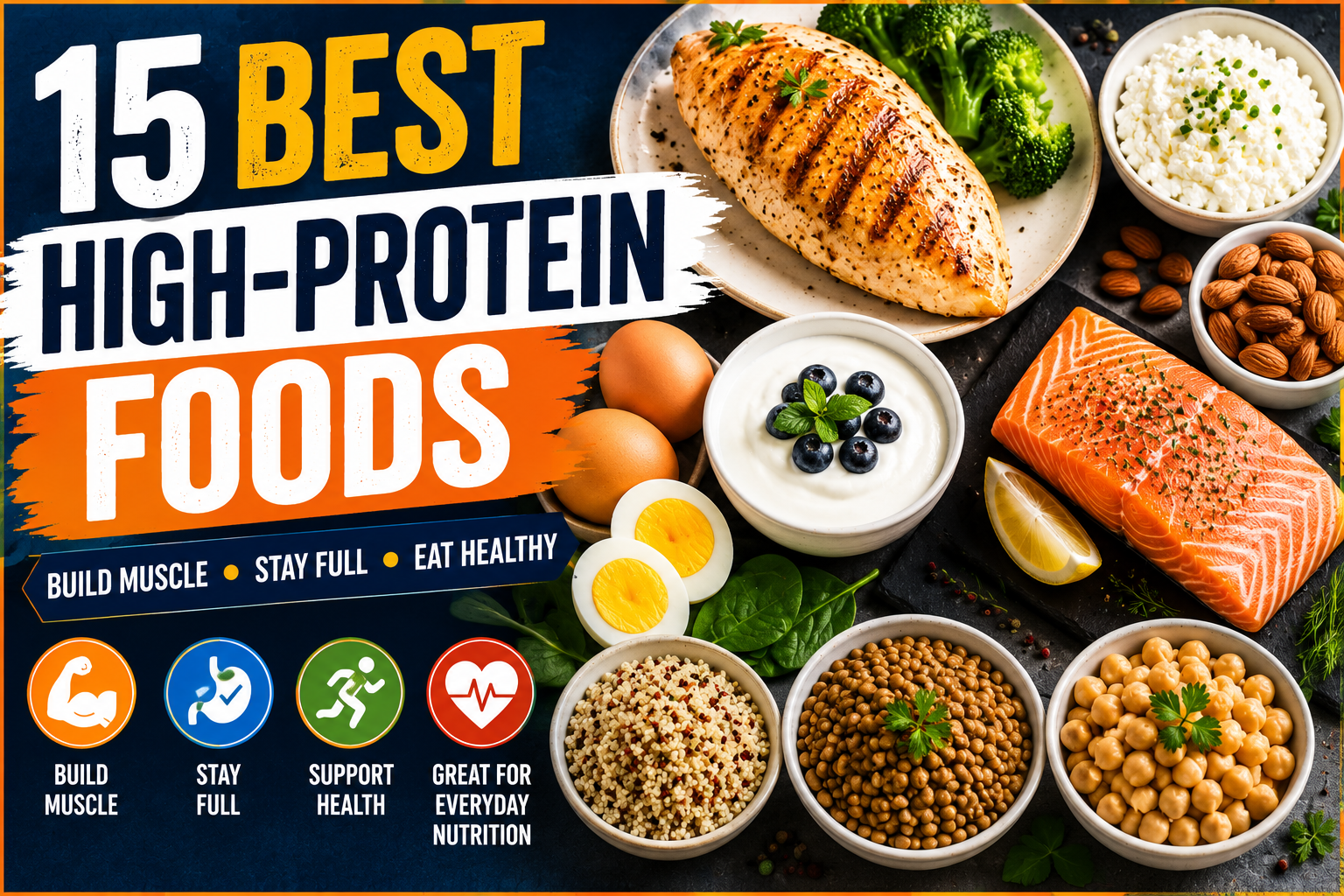

Protein is one of the most important nutrients your body needs. It helps build and repair muscles, supports healthy bones, keeps you feeling full longer, and plays a vital role in many bodily functions.
Whether you’re trying to lose weight, gain muscle, or simply eat a healthier diet, including high-protein foods in your daily meals can make a significant difference.
What Is Protein?
Protein is made up of amino acids, often called the building blocks of life. Your body uses protein to:
- Build muscles.
- Repair tissues.
- Produce hormones and enzymes.
- Support the immune system.
- Maintain healthy skin, hair, and nails.
How Much Protein Do You Need?
While individual needs vary, many adults benefit from consuming protein throughout the day.
Factors that influence protein requirements include:
- Age.
- Activity level.
- Body weight.
- Fitness goals.
Spreading protein intake across meals helps maximize its benefits.
Top High-Protein Foods
1. Eggs
Eggs are among the most nutritious foods available.
Benefits:
- High-quality complete protein.
- Rich in vitamins and minerals.
- Affordable and versatile.
2. Chicken Breast
Chicken breast is one of the leanest protein sources.
Benefits:
- Low in fat.
- Supports muscle growth.
- Easy to prepare.
3. Greek Yogurt
Greek yogurt contains more protein than regular yogurt.
Benefits:
- Supports gut health.
- Rich in calcium.
- Excellent breakfast or snack option.
4. Salmon
Salmon provides protein and heart-healthy omega-3 fats.
Benefits:
- Supports heart health.
- Rich in vitamin D.
- Great for balanced meals.
5. Cottage Cheese
Cottage cheese is packed with protein while being relatively low in calories.
Benefits:
- High in calcium.
- Helps increase satiety.
- Easy to include in meals.
6. Lentils
Lentils are an excellent plant-based protein.
Benefits:
- Rich in fiber.
- Budget-friendly.
- Supports digestive health.
7. Chickpeas
Chickpeas are versatile and nutrient-dense.
Benefits:
- High in fiber.
- Plant-based protein source.
- Great for salads and soups.
8. Almonds
Almonds provide protein and healthy fats.
Benefits:
- Heart-friendly.
- Easy healthy snack.
- Rich in vitamin E.
9. Tuna
Tuna is lean and protein-rich.
Benefits:
- Low calorie.
- High protein.
- Easy for quick meals.
10. Quinoa
Unlike many grains, quinoa contains all essential amino acids.
Benefits:
- Complete protein.
- Gluten-free.
- Rich in minerals.
Benefits of High-Protein Foods
Helps Build Muscle
Protein supports muscle maintenance and growth, especially when combined with exercise.
Supports Weight Management
Protein-rich meals help you feel satisfied and may reduce unnecessary snacking.
Supports Healthy Aging
Maintaining muscle mass becomes increasingly important as we age.
Helps Maintain Bone Health
Protein works alongside minerals like calcium to support healthy bones.
Easy High-Protein Meal Ideas
Breakfast
Greek yogurt with berries and almonds.
Lunch
Grilled chicken salad with quinoa.
Snack
Cottage cheese with fruit.
Dinner
Baked salmon with vegetables.
Common Myths
Myth: High Protein Is Only for Athletes.
Everyone needs protein for daily body functions.
Myth: Plant Proteins Are Inferior.
Plant proteins can be part of a balanced and nutritious diet.
Myth: More Protein Is Always Better.
A balanced diet with appropriate portions is the best approach.
Frequently Asked Questions
Which protein source is best?
A variety of animal and plant proteins provides excellent nutrition.
Is protein helpful for weight loss?
Protein-rich foods can help increase fullness as part of a balanced eating plan.
Can vegetarians eat enough protein?
Yes. Lentils, beans, chickpeas, quinoa, dairy products, and nuts are excellent sources.
Final Thoughts
Adding high-protein foods to your daily routine is a simple way to support overall health and wellness. Foods like eggs, chicken, Greek yogurt, salmon, lentils, quinoa, and nuts provide valuable nutrients while helping you stay satisfied throughout the day.
The key is variety. Combining different protein sources with fruits, vegetables, whole grains, and healthy fats creates balanced meals that support long-term health and an active lifestyle.
Small, consistent dietary improvements can have lasting benefits for your energy, fitness, and overall well-being.
