
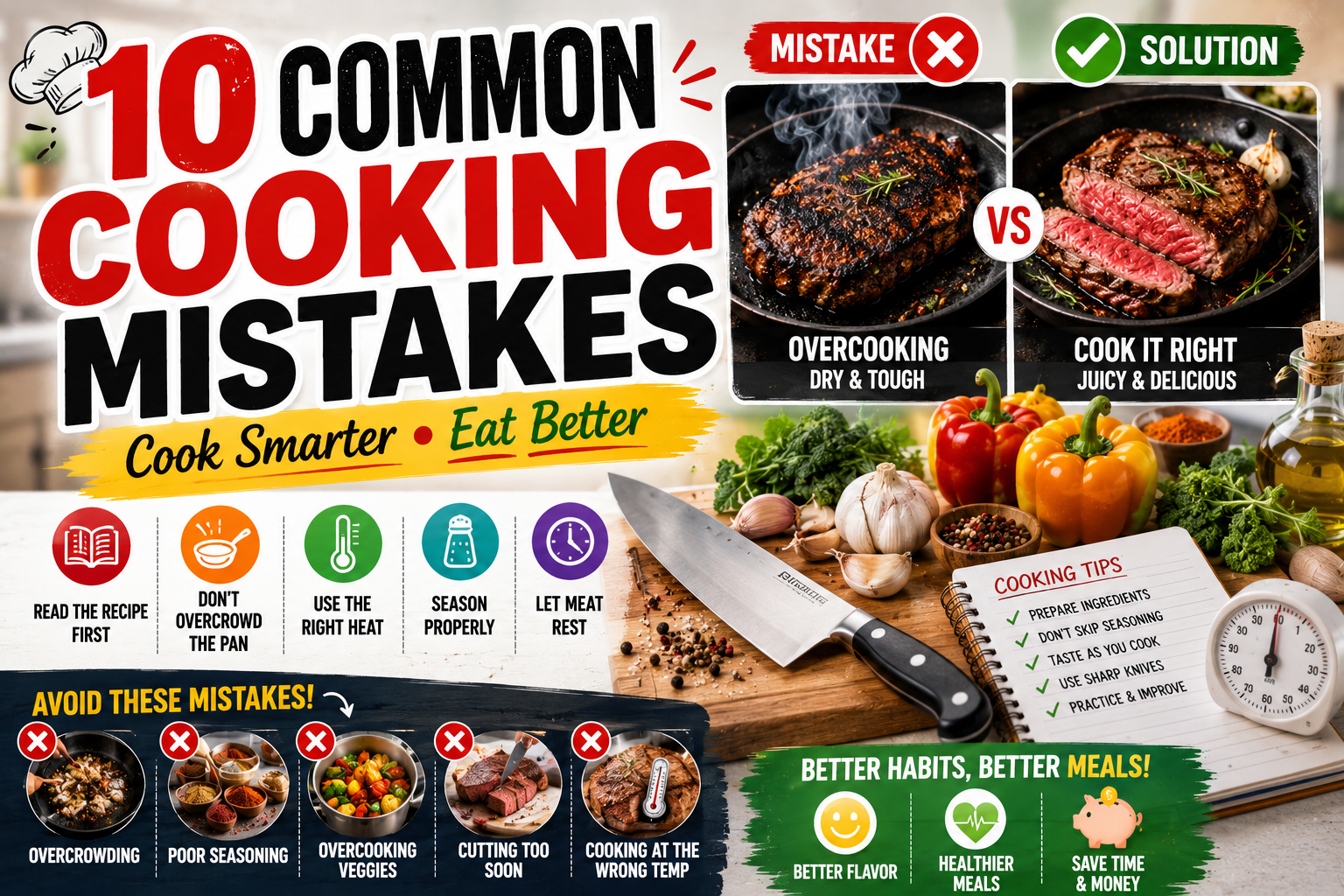

Cooking at home is one of the best ways to eat healthier, save money, and enjoy delicious meals. However, even experienced home cooks make mistakes that can affect flavor, texture, and nutrition.
The good news? Most cooking mistakes are easy to fix once you know what to look for.
Let’s explore the most common kitchen mistakes and how to avoid them.
Why Good Cooking Habits Matter
Simple cooking improvements can:
- Save time.
- Reduce food waste.
- Improve flavor.
- Help preserve nutrients.
- Make cooking more enjoyable.
Small changes often lead to much better results.
1. Not Reading the Recipe First
Many people start cooking before understanding the instructions.
The Problem:
- Missing ingredients.
- Wrong cooking order.
- Timing mistakes.
Solution:
Read the entire recipe before turning on the stove.
2. Overcrowding the Pan
Adding too much food at once prevents proper browning.
The Problem:
Food steams instead of searing.
Solution:
Cook in batches if necessary.
3. Using High Heat for Everything
Higher heat isn’t always better.
Common Results:
- Burned food.
- Uneven cooking.
- Dry meat.
Solution:
Use medium heat for most everyday cooking.
4. Not Seasoning Properly
Salt and spices help bring out natural flavors.
Mistake:
Adding all seasoning at the end.
Better Approach:
Season gradually throughout cooking.
5. Skipping Ingredient Preparation
Professional chefs often prepare ingredients first.
Benefits:
- Faster cooking.
- Less stress.
- Better organization.
This technique is often called “mise en place.”
6. Constantly Flipping Meat
Turning meat too often prevents a proper crust.
Solution:
Allow food to cook before flipping.
7. Cutting Meat Too Soon
Freshly cooked meat needs time to rest.
Why?
Resting helps juices redistribute.
Wait several minutes before slicing.
8. Overcooking Vegetables
Vegetables can lose texture and flavor when overcooked.
Better Methods:
- Roasting.
- Steaming.
- Quick sautéing.
9. Ignoring Knife Sharpness
A dull knife can make cooking harder and less safe.
Benefits of Sharp Knives:
- Easier cutting.
- Better precision.
- More enjoyable cooking.
10. Not Tasting Food While Cooking
Professional cooks taste frequently.
Why?
Small adjustments improve the final result.
Taste sauces, soups, and dressings before serving.
Kitchen Tips for Better Cooking
Organize Your Workspace
Keep ingredients within reach.
Clean as You Go
Small cleaning tasks prevent a huge mess later.
Use Fresh Ingredients
Fresh herbs and vegetables often improve flavor.
Keep Basic Pantry Staples
Always have:
- Olive oil.
- Rice.
- Pasta.
- Canned tomatoes.
- Beans.
- Spices.
Beginner-Friendly Cooking Habits
Start Simple
Choose easy recipes.
Practice Basic Skills
Learn:
- Chopping.
- Sautéing.
- Roasting.
- Boiling.
Don’t Fear Mistakes
Every cook learns through experience.
Frequently Asked Questions
Do expensive tools make better cooks?
No. Basic quality tools are usually enough.
How can I improve quickly?
Cook regularly and try new recipes.
Is meal planning helpful?
Yes. Planning meals reduces stress and saves time.
Quick Facts
✅ Most cooking mistakes are easy to fix.
✅ Preparation saves time.
✅ Proper seasoning improves flavor.
✅ Simple techniques often work best.
5 Practical Takeaways
- Read recipes completely.
- Prepare ingredients first.
- Don’t overcrowd pans.
- Taste food while cooking.
- Let cooked meat rest.
Final Thoughts
Everyone makes mistakes in the kitchen, but every mistake is an opportunity to improve. Learning a few basic techniques can dramatically enhance the taste, texture, and quality of your meals.
Cooking doesn’t have to be complicated. By planning ahead, seasoning properly, avoiding common errors, and practicing simple skills, you’ll become more confident and enjoy preparing food for yourself and your family.
The best cooks aren’t perfect—they simply keep learning and experimenting.
