
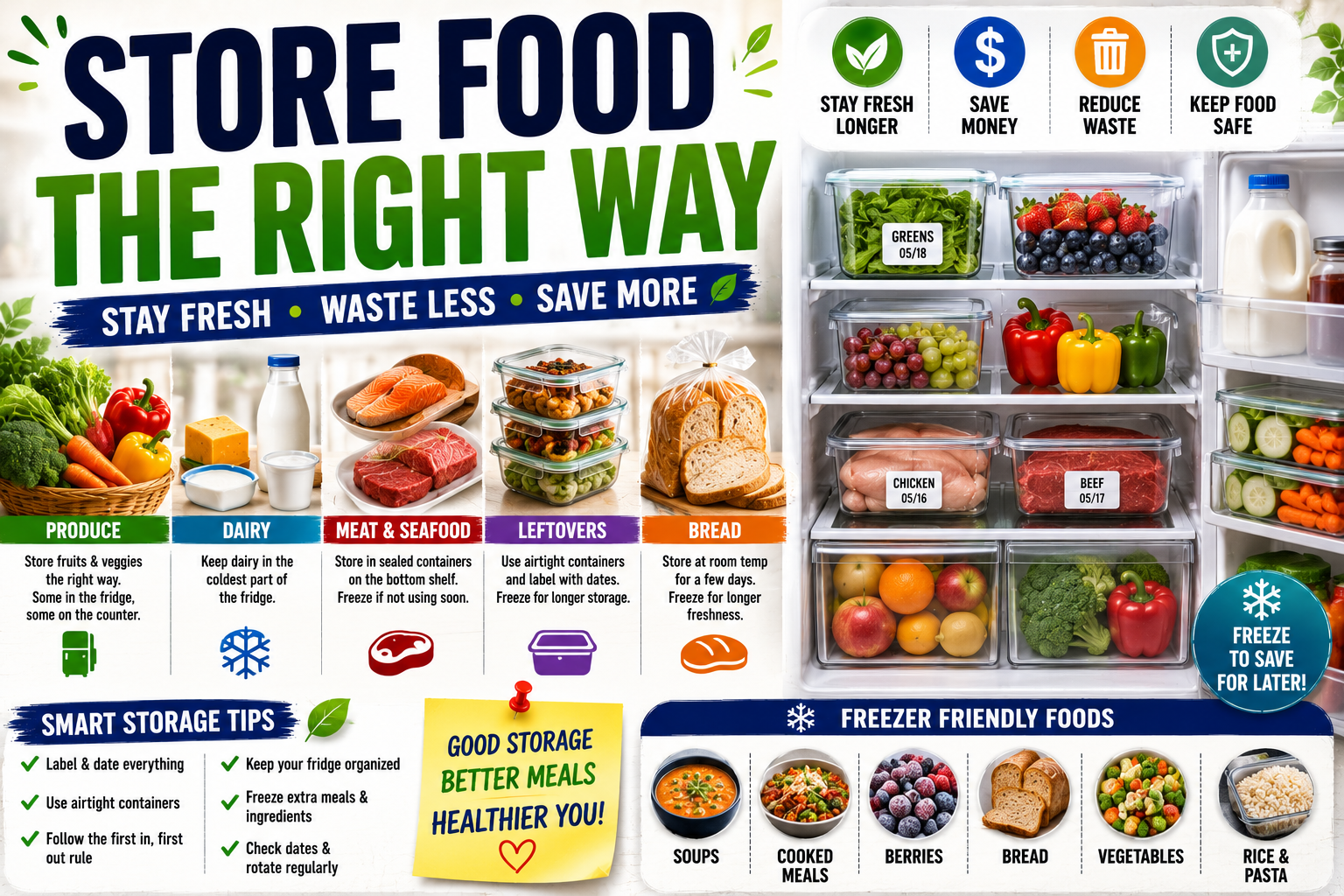

Food waste is a common problem in many households, but proper food storage can help extend freshness, save money, and make meal planning easier. Knowing where and how to store different foods helps preserve flavor, texture, and quality while reducing unnecessary waste.
Whether you’re storing fresh produce, dairy products, meat, or pantry staples, these simple tips can make a big difference.
Why Proper Food Storage Matters
Good food storage helps:
- Reduce food waste.
- Save money.
- Maintain freshness.
- Preserve flavor.
- Improve meal planning.
A few simple habits can help your groceries last much longer.
1. Store Fruits and Vegetables Correctly
Not all produce should be stored the same way.
Refrigerate:
- Berries.
- Grapes.
- Carrots.
- Broccoli.
- Spinach.
- Lettuce.
Store at Room Temperature:
- Bananas.
- Tomatoes.
- Potatoes.
- Onions.
- Garlic.
- Avocados (until ripe).
2. Keep Herbs Fresh
Fresh herbs can spoil quickly.
Best methods:
- Place herbs in a glass of water.
- Cover loosely with a plastic bag.
- Refrigerate delicate herbs.
3. Store Bread Properly
Bread can dry out or become stale.
Tips:
- Keep at room temperature for a few days.
- Freeze extra loaves.
- Slice before freezing for convenience.
4. Refrigerate Dairy Products
Store:
- Milk.
- Cheese.
- Yogurt.
- Butter.
Keep dairy products toward the back of the refrigerator where temperatures remain more consistent.
5. Store Meat Safely
Keep raw meat in sealed containers.
Best practice:
- Refrigerate if using soon.
- Freeze for longer storage.
Store meat on the bottom shelf to prevent leaks.
6. Freeze Leftovers
Freezing meals helps reduce waste.
Great foods to freeze:
- Soups.
- Chili.
- Cooked chicken.
- Rice.
- Bread.
- Vegetables.
7. Use Airtight Containers
Good containers help:
- Reduce moisture loss.
- Prevent odors.
- Keep pantry items fresh.
Excellent for:
- Rice.
- Pasta.
- Flour.
- Sugar.
- Cereal.
8. Label Food
Use labels with dates.
Benefits:
- Reduces waste.
- Makes organization easier.
- Helps rotate older foods first.
9. Organize Your Refrigerator
Keep similar foods together.
Top shelves:
Ready-to-eat foods.
Middle shelves:
Dairy products.
Bottom shelf:
Raw meat.
Drawers:
Fruits and vegetables.
10. Follow the First In, First Out Rule
Use older food before newly purchased items.
This simple habit helps reduce waste significantly.
Foods That Last a Long Time
Excellent pantry staples:
- Rice.
- Pasta.
- Oats.
- Beans.
- Lentils.
- Canned vegetables.
- Peanut butter.
- Honey.
Common Food Storage Mistakes
Washing Berries Too Early
Moisture can speed spoilage.
Wash just before eating.
Storing Potatoes with Onions
These should be stored separately.
Overfilling the Refrigerator
Air circulation helps maintain proper temperatures.
Ignoring Expiration Dates
Regularly check your refrigerator and pantry.
Simple Weekly Kitchen Routine
Monday:
Check refrigerator.
Wednesday:
Use leftovers.
Friday:
Freeze extra food.
Weekend:
Plan next week’s meals.
Frequently Asked Questions
Can you freeze milk?
Yes, though texture may change slightly.
Should tomatoes be refrigerated?
Generally, room temperature helps preserve flavor.
Do airtight containers help?
Yes, they help maintain freshness and reduce moisture exposure.
Quick Facts
✅ Proper storage reduces waste.
✅ Freezing extends food life.
✅ Labels improve organization.
✅ Airtight containers help preserve freshness.
5 Practical Tips
- Store produce correctly.
- Label leftovers.
- Freeze extra meals.
- Rotate pantry items.
- Clean the refrigerator regularly.
Final Thoughts
Proper food storage is one of the easiest ways to save money and reduce waste while keeping your meals fresh and delicious. Simple habits like using airtight containers, organizing your refrigerator, freezing leftovers, and storing produce correctly can significantly extend the life of your groceries.
The goal isn’t perfection—it’s building practical habits that make everyday cooking easier and more efficient. A well-organized kitchen helps you waste less food, spend less money, and enjoy healthier meals throughout the week.
